 Research Progress Hub
From weekly updates to research outcomes.
RPH is one place for a research lab's weekly updates, meetings, follow-up and academic records. Each short update adds to a record you can use when the report, the transcript or the thesis is due.
Request a demoSee how it works
Or try it free with your own lab for 8 weeks.
Each mark is one weekly update on one paper. Sample data.
Your meeting should start with what changed.
Most labs keep progress in email threads, chat messages and spreadsheets. So the meeting begins with catching up, decisions get lost, and at the end of the year someone collects it all again by hand.
One week in RPH
-
1
Students send a short update
They choose what they worked on, then note the next step and where they need help.
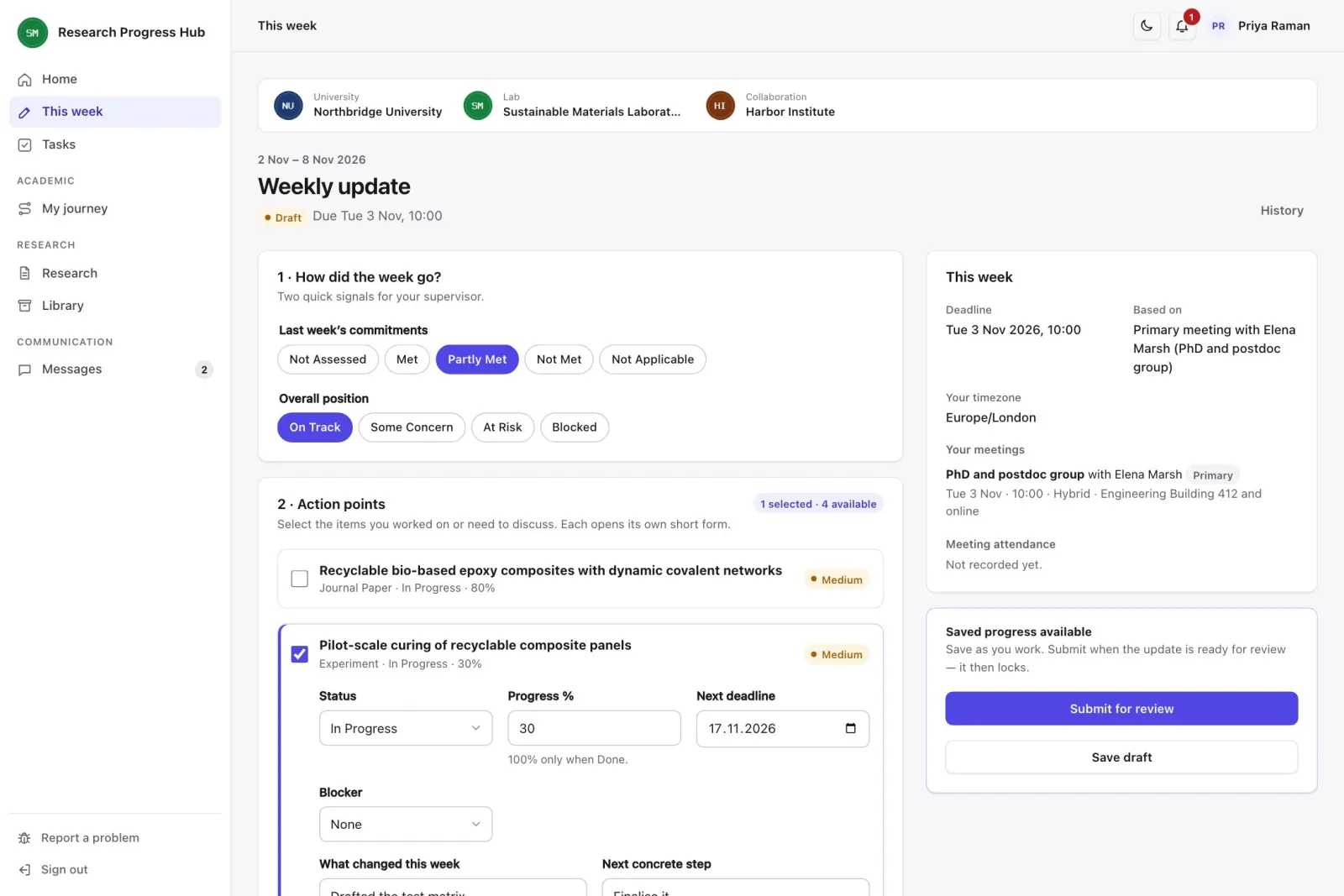
A student's weekly update. Sample data. -
2
You see who needs you
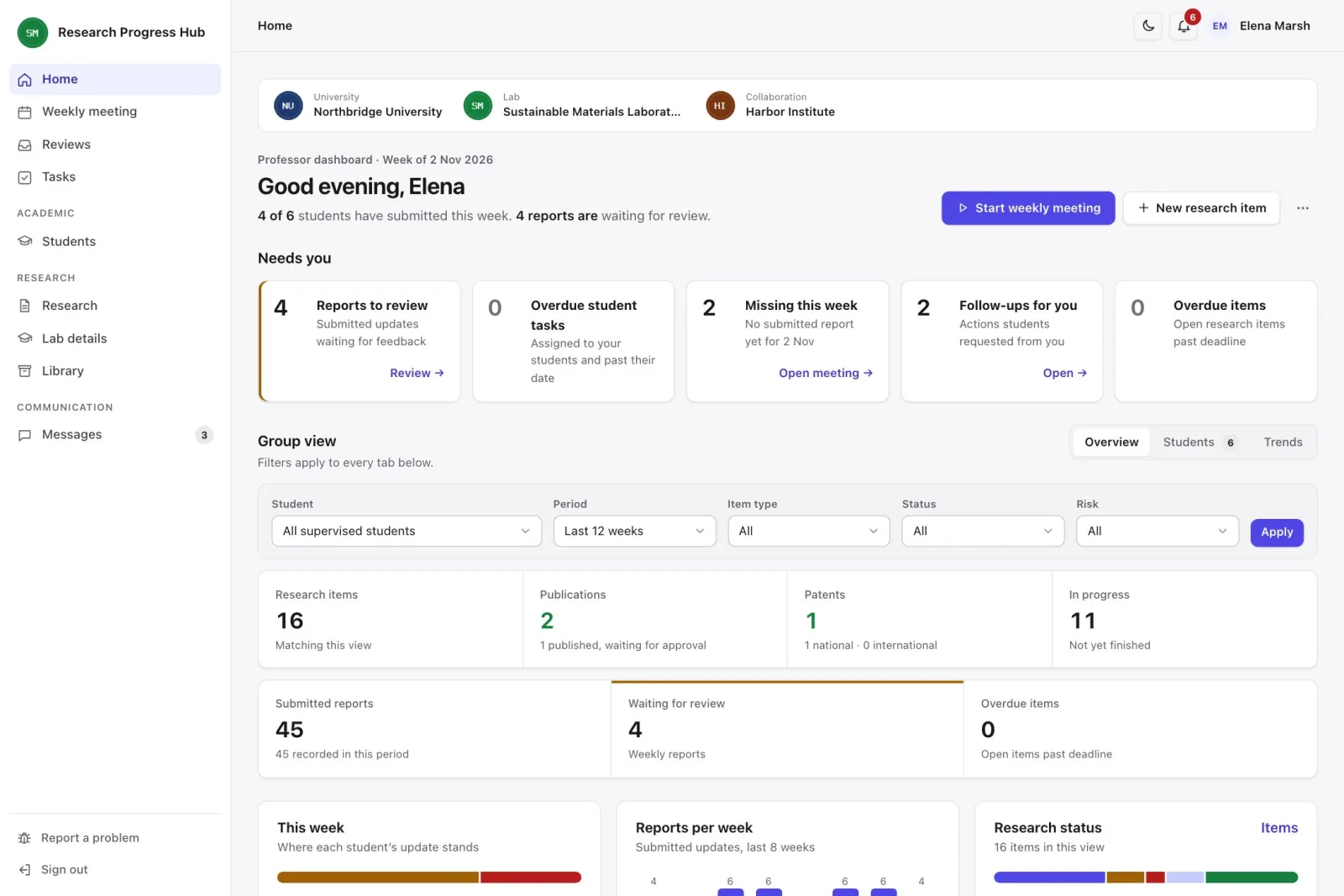
Before the meeting, your home page shows what was submitted, what is missing and who is blocked.
A professor's home page. Sample data. -
3
You meet one student at a time
Their report, attendance and your feedback sit on one screen.
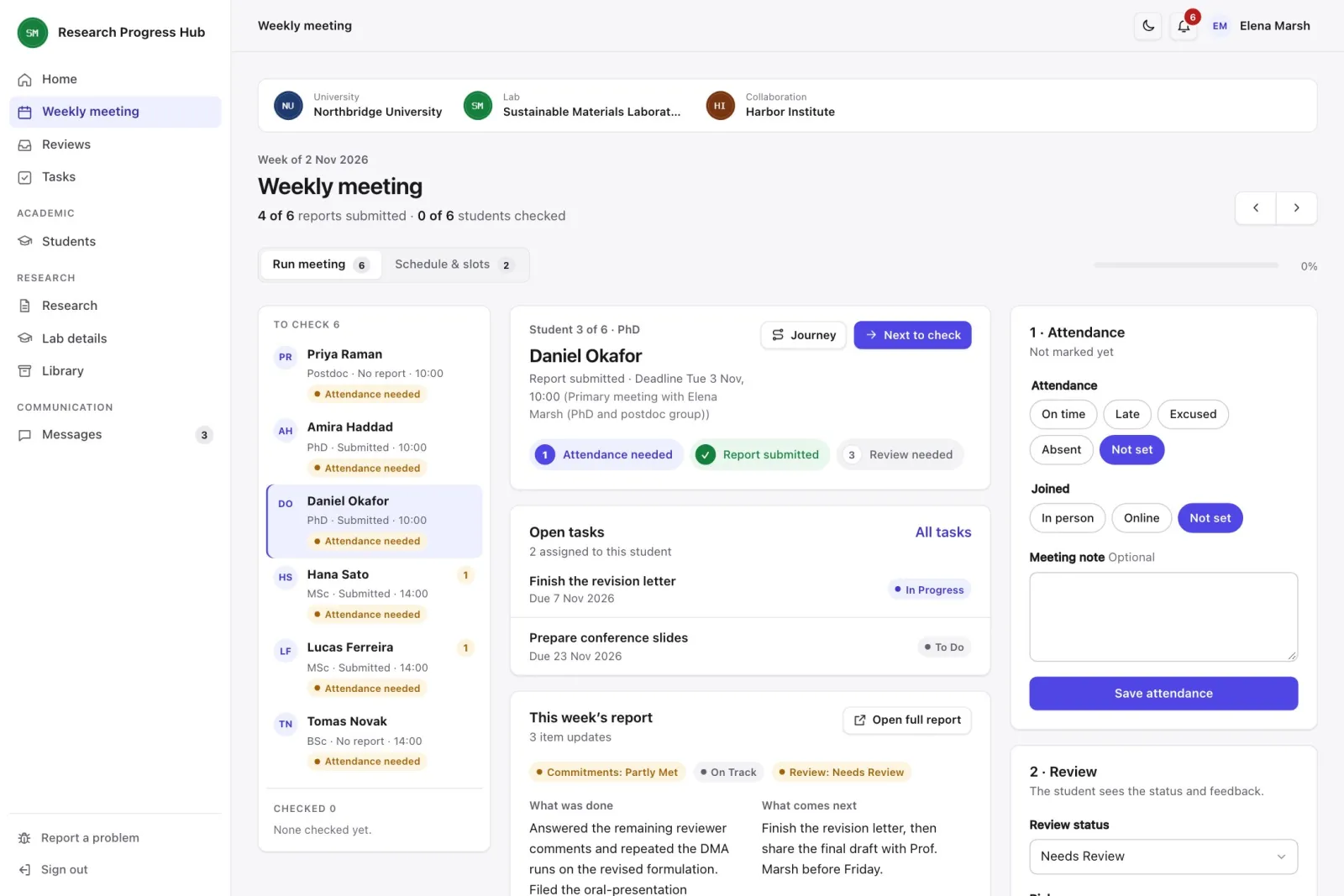
The meeting view, one student at a time. Sample data. -
4
Decisions become tasks
Each follow-up has an owner and a date, and stays linked to the research behind it.
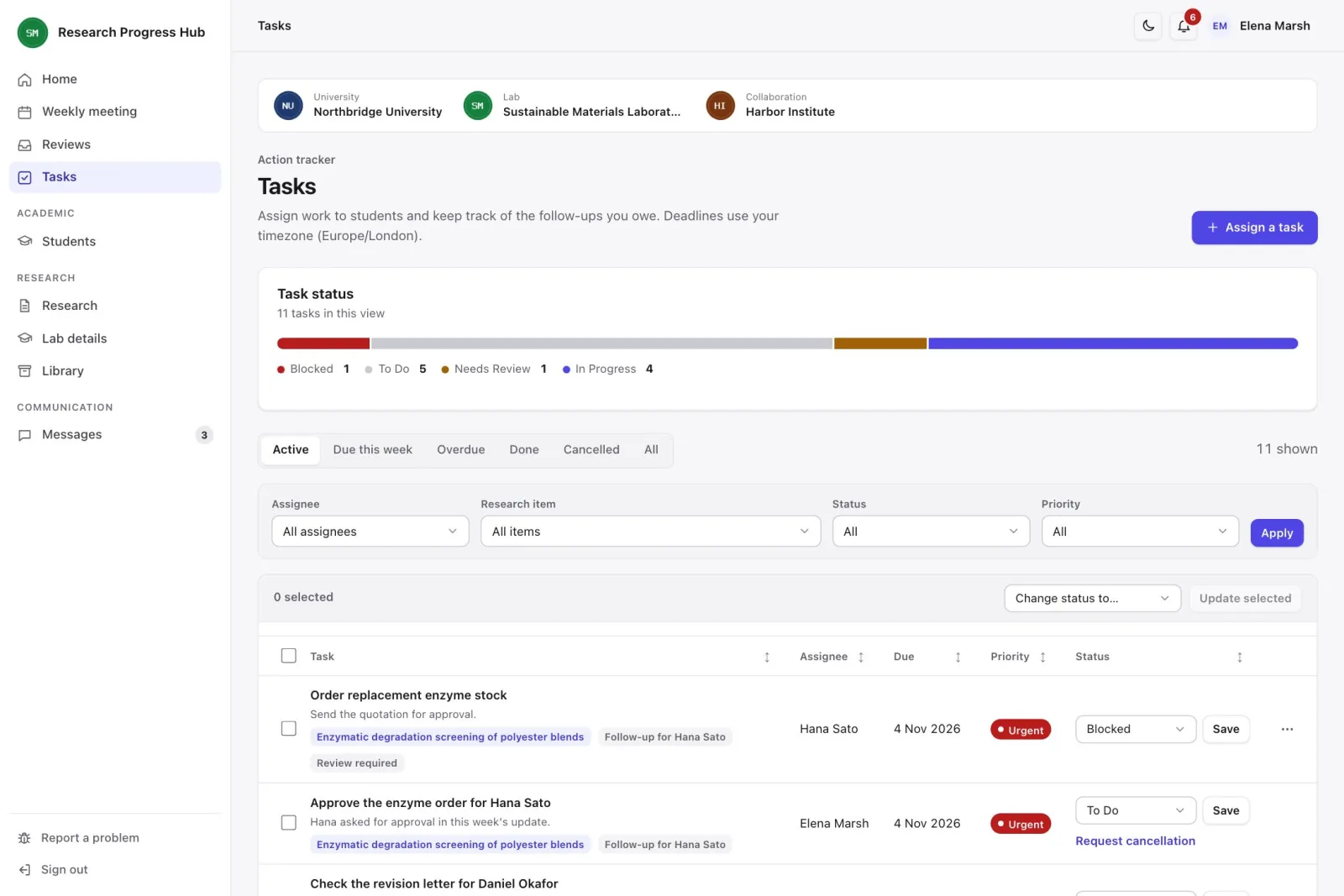
Follow-up tasks with an owner and a date. Sample data.
What professors ask first
- Will my students actually use it?
- The update is a short form with a clear deadline, tied to work they are already doing. They also get something back: your feedback, their tasks, and their own record of research, courses and milestones.
- Is this more admin for me?
- You review reports inside the meeting view, not as a separate job. Lab reports and research records come from the same system, so you don't rebuild them at the end of the year.
- Can students read each other's reports?
- No. Students can share a research item, but each person's weekly text stays between them and their supervisor.
- What if it doesn't suit my lab?
- Try it with your own lab for 8 weeks, free. That is enough weekly cycles to see whether your students keep it up.
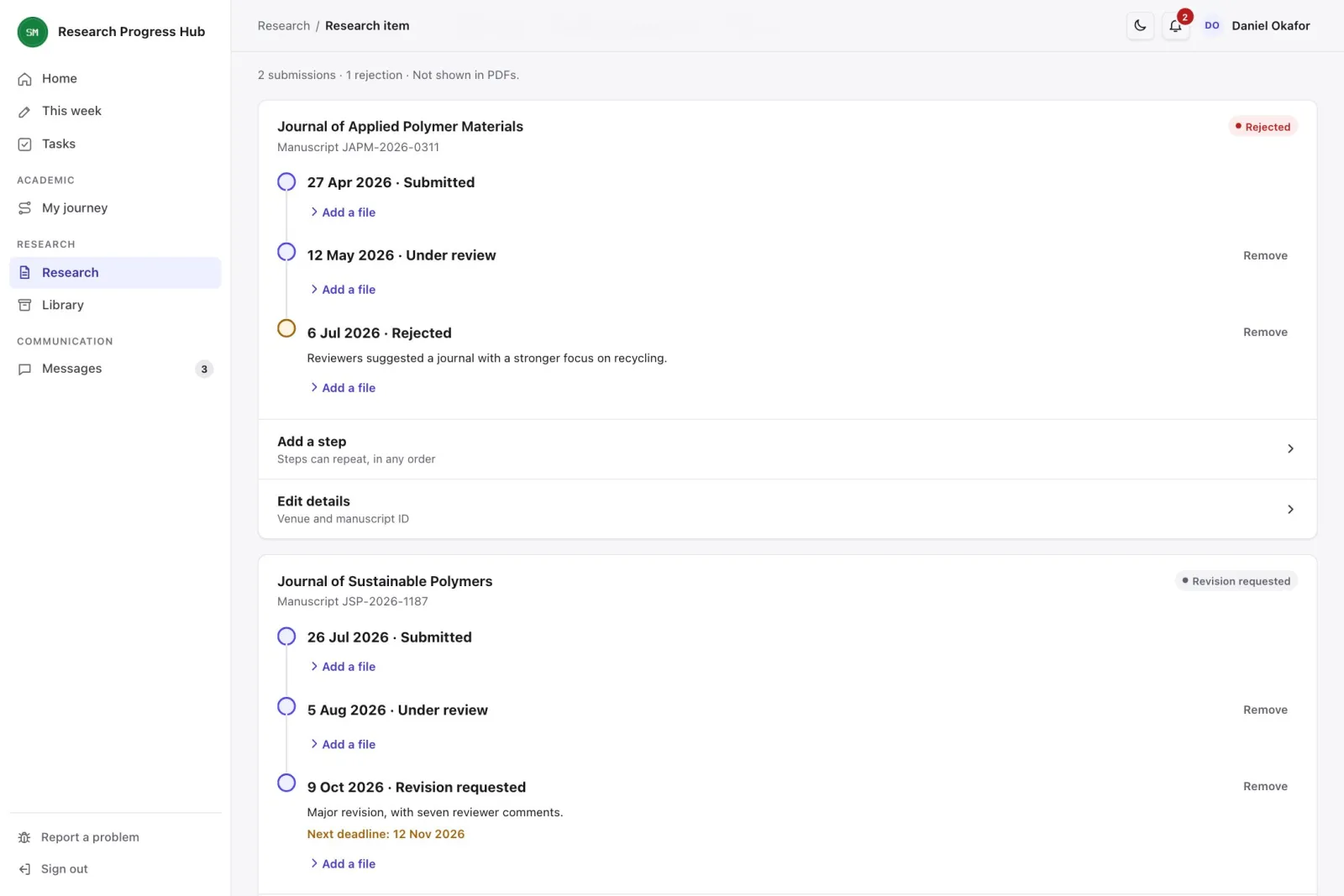
A rejection doesn't end the paper
Each journal or conference gets its own dated timeline, and the next submission keeps the earlier history with it. A patent works the same way, with national and international applications under one record, and objections that stay open until a defence is linked.
Records you can hand over
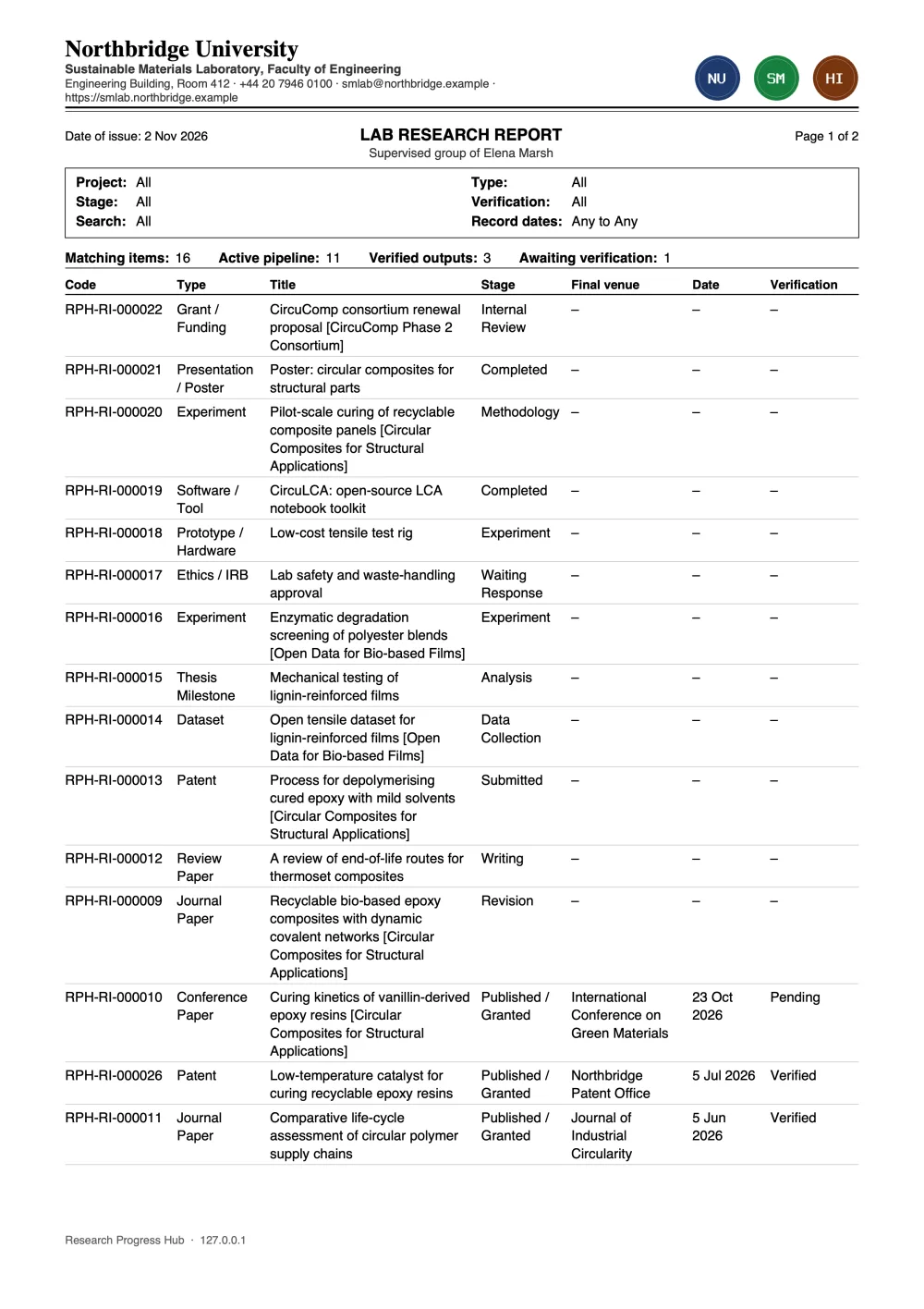
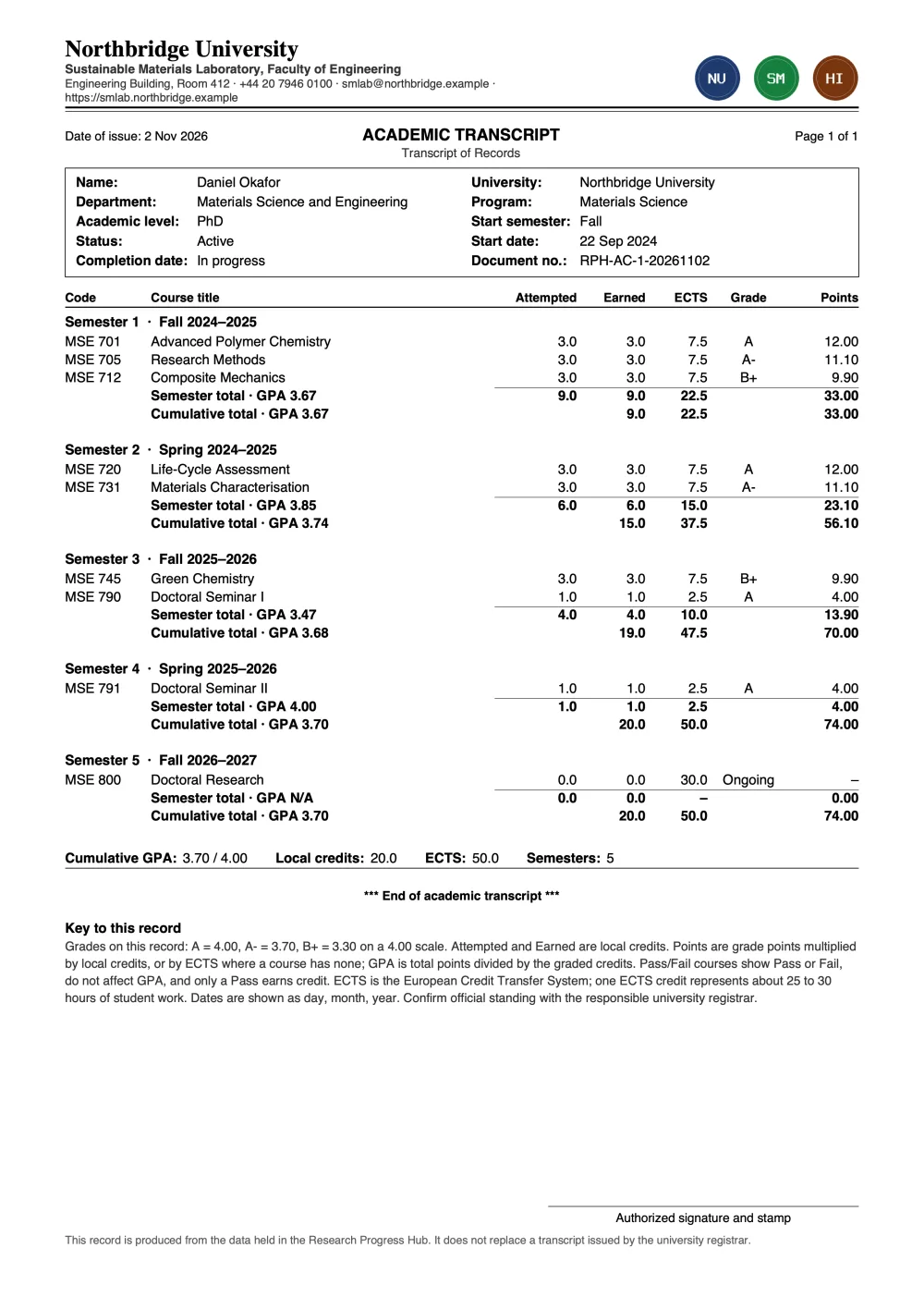
Export transcripts and lab reports as PDFs under your university and lab name, with GPA, local credits and ECTS set out clearly. You choose what each one includes before you create it. They are lab records and do not replace a transcript from the registrar.
One yearly price per lab
Add every student without counting seats. All plans include all features.
| Plan | For | Price | Action |
|---|---|---|---|
| Pilot | One lab, to try it | Free for 8 weeks | Start with a demo |
| LabRecommended | 1 professor, up to 20 students | €1,200 a year | Request a demo |
| Department | Up to 6 labs, about 120 students | €4,900 a year | Request a demo |
| Institution | A whole university, on your own server | From €9,900 a year | Talk to us |
See your lab's week in RPH.
We'll walk you through it with sample data and answer your questions about setting it up.